
Slab Leak Detection & Repair in Eastern Massachusetts
A slab leak hides under your concrete foundation — silently eroding soil, spiking your water bill, and weakening your home's structure. A1 Discount Plumber finds it without destroying your floor, then fixes it the right way.
Schedule Leak DetectionWhat Is a Slab Leak and How Is It Fixed?
A slab leak is a water pipe leak beneath a concrete foundation. Because the pipes are buried, detection requires specialized equipment — acoustic listening devices, thermal imaging cameras, and video pipe inspection — rather than visual inspection. Once pinpointed, the three primary repair options are spot repair (breaking the slab at the exact leak location), repiping (rerouting the line through walls or the attic to bypass the slab entirely), or trenchless pipe lining (sealing the pipe from inside without excavation). Early detection is critical — an untreated slab leak can cause foundation settling, mold growth, and structural cracking within weeks.
The Leak You Can't See Is the One That Destroys Your Home
Unlike a burst pipe under the kitchen sink, a slab leak gives no dramatic warning. It sits beneath inches of concrete, silently dripping or spraying into the soil below your foundation. By the time you notice — a warm spot on the floor, a water bill that doubled overnight, the faint sound of running water when every faucet is off — the leak may have been active for weeks.
Slab leaks are one of the most structurally dangerous plumbing failures a Massachusetts homeowner can face. The escaping water erodes the compacted base beneath your foundation, creating voids that cause cracking, settling, and in severe cases, foundation failure. A1 Discount Plumber uses non-invasive diagnostic technology to pinpoint slab leaks without breaking your floor — then applies the repair method that matches your pipe, your home, and your budget.
How Slab Leak Detection & Repair Works
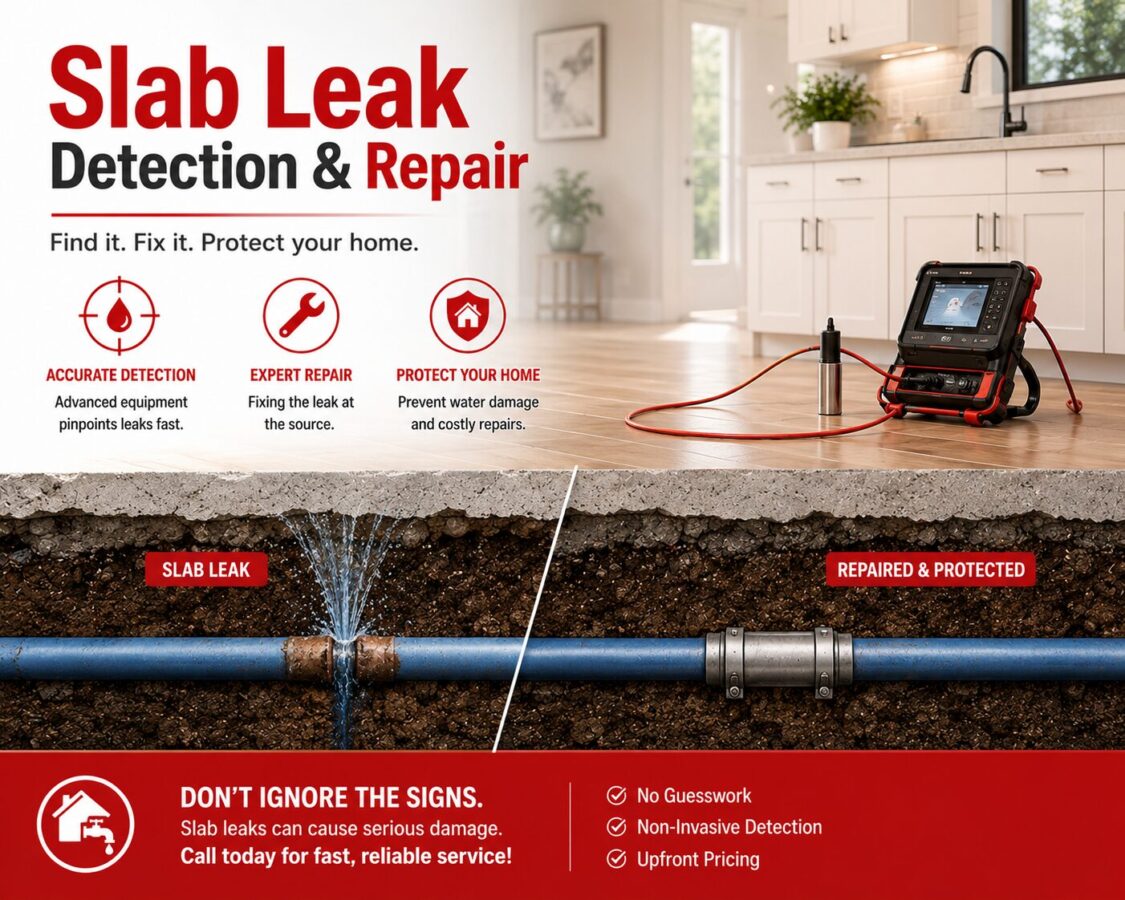
From finding the leak without breaking concrete to repairing the pipe at the source — the complete picture of how we protect your home.
Warning Signs You May Have a Slab Leak
Slab leaks hide beneath your foundation, but they leave clues. If you notice more than one of these symptoms at the same time, call a professional — don't wait.
Sudden Spike in Your Water Bill
If your water usage hasn't changed but the bill jumped sharply, a pressurized line is likely leaking 24/7 beneath your slab — wasting hundreds of gallons a day.
Warm or Hot Spots on the Floor
A hot water line leaking under the slab heats the concrete above it. Unexplained warm spots — especially on tile or hardwood — almost always indicate a hot water slab leak.
Sound of Running Water When Everything Is Off
If you hear a faint hissing or rushing sound through the floor when all fixtures are turned off, pressurized water is escaping from a pipe beneath the foundation.
Damp Carpet, Warped Flooring, or Mold
Moisture forcing up through the slab saturates carpet padding, warps hardwood, and creates ideal conditions for mold and mildew along baseboards and under flooring.
Drop in Water Pressure
A significant leak diverts water volume away from your fixtures. If showers and faucets suddenly feel weaker across the house, the pressure is escaping underground.
Cracks in Walls, Ceilings, or Foundation
Prolonged soil erosion from a slab leak causes the foundation to settle unevenly. The shifting creates visible cracks in drywall, ceilings, and the slab itself.
Unusually Green Patch of Lawn Near Foundation
If a section of grass near your home is dramatically greener or growing faster than the rest, a leaking line may be feeding water and nutrients into the soil below.
Musty or Moldy Smell at Ground Level
Trapped moisture under and around the slab creates a persistent musty odor. If the smell is strongest near the floor and doesn't respond to cleaning, the source is below.
Suspect a Slab Leak? Don't Wait.
Every day a slab leak goes unrepaired, the soil beneath your foundation erodes further. Early detection saves thousands in structural damage. A1 Discount Plumber offers non-invasive slab leak detection across Eastern Massachusetts.

How We Find Slab Leaks Without Breaking Your Floor
Because the leak is buried beneath concrete, finding it requires technology — not a jackhammer. Our detection process uses multiple diagnostic methods to pinpoint the exact location before anything is opened up.
- Acoustic detection — electro-acoustic listening devices amplify the sound of pressurized water escaping from a crack, letting us hear exactly where the leak is through the slab
- Thermal imaging — infrared cameras detect temperature anomalies on the floor surface, identifying hot spots from a leaking hot water line or cold spots from a supply line
- Video pipe inspection — a small camera is pushed through the pipe to visually confirm cracks, joint separations, or corrosion from the inside
- Hydrostatic pressure testing — the pipe is isolated and tested under pressure to confirm whether and how fast it's losing water
These methods allow us to locate the leak within inches — so the repair targets the exact spot, not a guessed area. No unnecessary concrete demolition. No exploratory excavation.
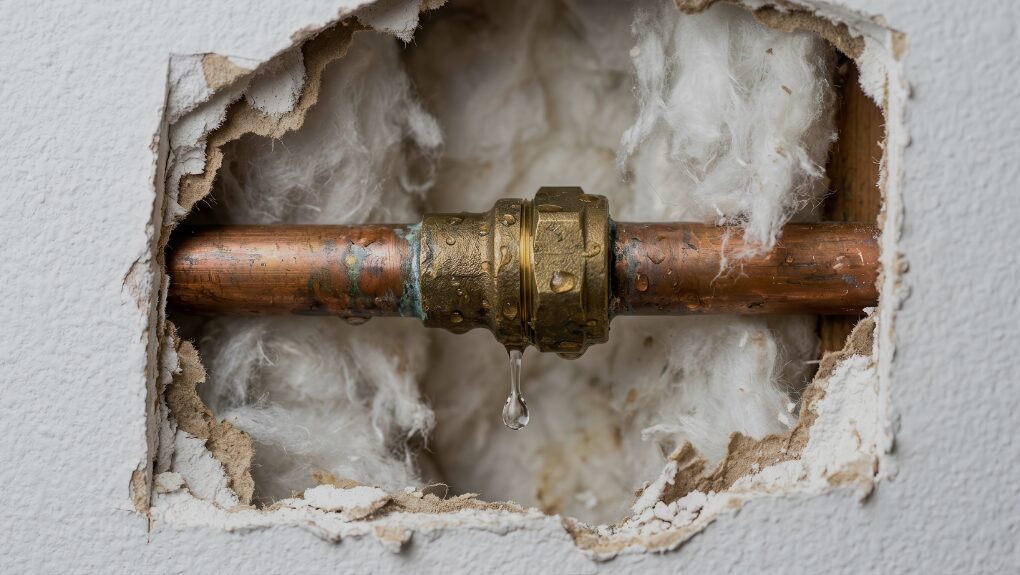
Three Ways to Fix a Slab Leak — And How We Choose
Not every slab leak gets the same repair. The right method depends on the pipe material, the location of the leak, how many leaks there are, what's sitting on the floor above, and whether the pipe system is likely to fail again soon.
We evaluate all of this during the detection visit and recommend the repair that makes the most sense for your home — not the one that's fastest for us. Sometimes that's a targeted spot repair. Sometimes it's abandoning the under-slab pipe entirely and running new lines through the walls. Here's the honest breakdown of each approach.
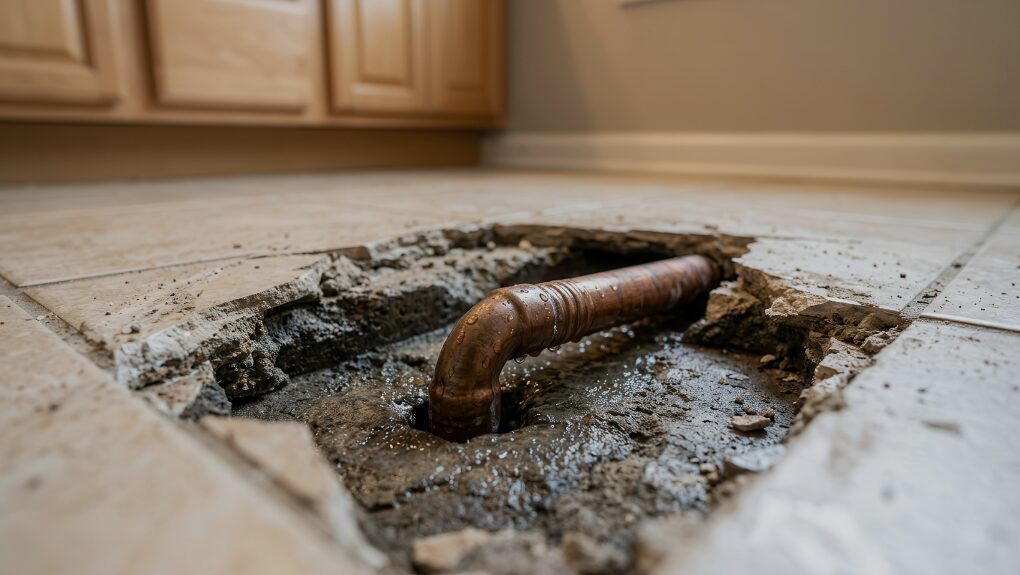
Why Waiting Makes Everything Worse
Because slab leak symptoms start mild — a warm floor, a quiet hissing sound — many homeowners assume it can wait. It can't. Water escaping under pressure erodes the structural base beneath your foundation on a predictable, accelerating timeline.
The difference between a manageable plumbing repair and a catastrophic foundation project often comes down to weeks, not months. The longer the leak runs, the more soil washes away, the more the slab shifts, and the more expensive the total project becomes. Catching it early means fixing the pipe. Catching it late means fixing the pipe and the foundation and the floors and the mold.
Here's the typical progression we see in Massachusetts homes with unaddressed slab leaks:
The Slab Leak Damage Timeline
What happens underground when a slab leak goes unrepaired — and how quickly a plumbing problem becomes a structural one.
Sub-Base Erosion Begins
Escaping water starts washing away the compacted crushed stone and soil that supports the concrete slab. A void begins to form beneath the foundation. Water bill rises. You may hear faint running water or notice a warm spot on the floor. At this stage, the repair is straightforward and the cost is manageable.
Moisture Reaches the Surface
Water pools in the void beneath the slab. Upward hydrostatic pressure forces moisture through the porous concrete, warping hardwood floors, soaking carpets, and triggering rapid mold growth along baseboards and under flooring. The water bill is now significantly elevated.
Foundation Cracking and Settling
The unsupported slab cracks under the weight of the house and sinks into the eroded void. Structural shifting begins — cracked drywall, jammed doors, tilted floors, and visible gaps between walls and ceiling. The repair now involves plumbing, flooring, and concrete restoration.
Foundation Failure
Complete foundation stabilization is required — underpinning, foundation jacking, or pier installation. At this stage, fixing the plumbing is secondary. Total repair costs can exceed $10,000+ and the home may be unsafe to occupy until structural work is complete.
What Affects Slab Leak Repair Cost in Massachusetts?
Every slab leak is different. Here's what drives the price on your specific repair — and why the final bill is rarely just for the plumbing.
Detection & Diagnostics
Acoustic, thermal, or video leak detection typically adds a flat fee of $150 to $600 before repairs begin. Many companies credit this toward the repair cost.
Repair Method
Spot repair is the least expensive upfront. Repiping costs more but prevents future under-slab leaks. Trenchless lining avoids all excavation but carries higher material costs per foot.
What's Above the Leak
A leak under an unfinished basement costs far less than one under custom tile, hardwood, or kitchen cabinetry. The "build-back" — restoring the floor above — is often the most expensive variable.
Slab Thickness & Depth
Standard 4-inch residential slabs are straightforward. Thicker commercial-grade foundations or deeply buried pipes increase excavation time and cost significantly.
Pipe Material & Condition
A single crack in copper is a quick fix. Widespread corrosion in aging galvanized or polybutylene pipe often means full repiping is the smarter investment.
Emergency vs. Scheduled
Active flooding or visible foundation movement requires immediate response at emergency rates. If your signs are early — warm floor, high bill — scheduling saves money.
Find the Leak. Fix the Pipe. Protect the Foundation.
Non-invasive detection. Honest repair recommendation. Same-day emergency service across Eastern Massachusetts. Don't let a hidden leak become a foundation project.
Slab Leak Questions, Answered
The questions Massachusetts homeowners ask us most about slab leaks, detection, and repair options.
Licensed plumbers use specialized non-invasive equipment to find slab leaks without breaking the concrete. Acoustic listening devices amplify the sound of pressurized water escaping from a crack beneath the slab. Thermal imaging cameras detect temperature changes on the floor surface — hot spots from a leaking hot water line, cool spots from a supply line. Video pipe inspection cameras travel through the pipe interior to visually confirm cracks, joint separations, or corrosion. In some cases, hydrostatic pressure testing isolates the pipe and measures pressure loss to confirm the leak rate. These methods can pinpoint a slab leak within inches without any demolition during the search phase.
Yes. Modern non-invasive leak detection equipment allows professional plumbers to locate the exact source of a leak beneath the slab without breaking any concrete during the search phase. Acoustic sensors, infrared thermal cameras, and video pipe inspection all identify the leak from above the slab or from inside the pipe. Concrete is only opened during the actual repair — and only at the exact location the diagnostics identified. This targeted approach eliminates exploratory demolition and significantly reduces repair costs and property damage.
Slab leak repair costs in Massachusetts typically range from $1,500 to $5,000+ depending on the repair method, pipe location, and the finish materials above the leak. Spot repair (breaking the slab at the exact point) generally runs $1,500 to $2,500. Repiping through the walls or attic costs $2,000 to $5,000+ but permanently bypasses the under-slab pipe. Trenchless epoxy lining runs $80 to $250 per linear foot. Detection alone adds a flat fee of $150 to $600, which is often credited toward the repair. The most unpredictable cost is the "build-back" — restoring whatever flooring, cabinetry, or concrete sits above the leak. We provide flat-rate written quotes after detection so you know the total before any work begins.
Standard homeowners insurance typically covers the cost of tearing out the slab to reach the pipe and repairing the resulting water damage — ruined drywall, warped floors, mold remediation. However, it usually does not cover the cost of the plumbing pipe repair itself. Some policies offer a "service line endorsement" or "sewer backup rider" that extends coverage to pipe repair. If the insurer determines the damage resulted from long-term neglect rather than a sudden rupture, the claim may be denied entirely. Check your policy or call your agent before a problem occurs to understand your specific coverage.
For a single, isolated leak in accessible pipe under a low-value floor (unfinished basement, utility closet), breaking the slab for a spot repair is usually cheaper. But for leaks under expensive flooring — hardwood, tile, custom cabinetry — rerouting through the walls often saves thousands in restoration costs. Rerouting also eliminates the risk of future leaks in that same under-slab pipe, making it the smarter long-term investment for older homes with aging plumbing systems. We evaluate both options during detection and quote them side by side so you can make an informed decision.
You should not ignore a slab leak. Left untreated, escaping water erodes the compacted soil beneath your foundation, leading to cracking, settling, mold growth, and potentially catastrophic structural failure. The typical progression: within 1-2 weeks, sub-base erosion begins and water bills spike. By weeks 3-6, moisture reaches the surface — warping floors, soaking carpets, and growing mold. By months 2-3, the unsupported slab begins cracking and settling visibly. Beyond month 4, full foundation stabilization may be required, pushing total costs well beyond what a timely pipe repair would have cost.
No. A hot or warm spot on the floor only occurs if the leak is on a hot water line. If the leak is on a cold water supply line or a sewer drain line, you won't feel a temperature difference on the flooring. Cold water leaks produce the same structural damage — soil erosion, foundation shifting, mold — but without the thermal clue. This is why other symptoms (water bill spikes, running water sounds, carpet dampness) are equally important indicators, and why professional detection equipment is necessary to confirm a slab leak regardless of floor temperature.
The most common causes of slab leaks in Massachusetts homes are pipe corrosion (especially in older copper and galvanized systems), ground shifting from freeze-thaw cycles, abrasion from pipes rubbing against concrete or gravel, and poor original installation. Hard water accelerates internal pipe corrosion over time. In older homes, the original pipe materials — copper, galvanized steel, or cast iron — may simply be reaching the end of their service life after decades of use. Massachusetts freeze-thaw cycles add additional stress by shifting the soil around the pipes seasonally.
You can identify the symptoms of a slab leak — warm floors, water bill spikes, running water sounds, dampness — but accurately locating the leak beneath the slab requires professional equipment. A simple meter test can confirm a leak exists: shut off all water fixtures, check your water meter, wait 2 hours without using any water, and check the meter again. If it's moved, you have a leak somewhere. But finding exactly where under the slab requires acoustic listening devices, thermal imaging, or video pipe inspection — equipment that allows precise, targeted repair instead of exploratory demolition.
Yes. A1 Discount Plumber provides non-invasive slab leak detection, spot repair, repiping, trenchless pipe lining, and emergency slab leak service across Eastern Massachusetts — including Acton, Acushnet, Ashland, Bellingham, Berkley, Berlin, Bolton, Boxborough, Dartmouth, Fall River, Foxborough, Grafton, New Bedford, and Taunton. Call (508) 556-2269 for same-day detection service or to schedule an assessment.
Slab Leak Detection & Repair Across Eastern MA
Acton • Acushnet • Ashland • Bellingham • Berkley • Berlin • Bolton • Boxborough • Dartmouth • Fall River • Foxborough • Grafton • Mansfield • New Bedford • Taunton • And surrounding Eastern Massachusetts communities.
Find It. Fix It. Protect Your Home.
Non-invasive detection. Targeted repair. Same-day emergency service across Eastern Massachusetts.